
Type of activity and age
Match the guard to how hard your sport hits and how old you are. We make three tiers:
| Who it's for | How it's built | |
|---|---|---|
| Light, $230 | 15 and under | Dual layer |
| Medium, $320 | 16 and over in rugby league, rugby union, AFL, boxing, BJJ and other contact sports | Dual layer with bite registration |
| Heavy, $365 | MMA, Muay Thai, kickboxing and hockey | Triple layer with bite registration |
Types of mouthguards
Sports mouthguards come in three types, stock, boil and bite and custom, and custom guards are made with one layer or several.
| How it's made | What to know | |
|---|---|---|
| Stock | Preformed in set sizes, worn straight from the pack | Cheapest; not shaped to your teeth at all |
| Boil and bite | Softened in hot water and bitten into shape at home | Sold in sports stores and chemists; home moulding can leave thin spots |
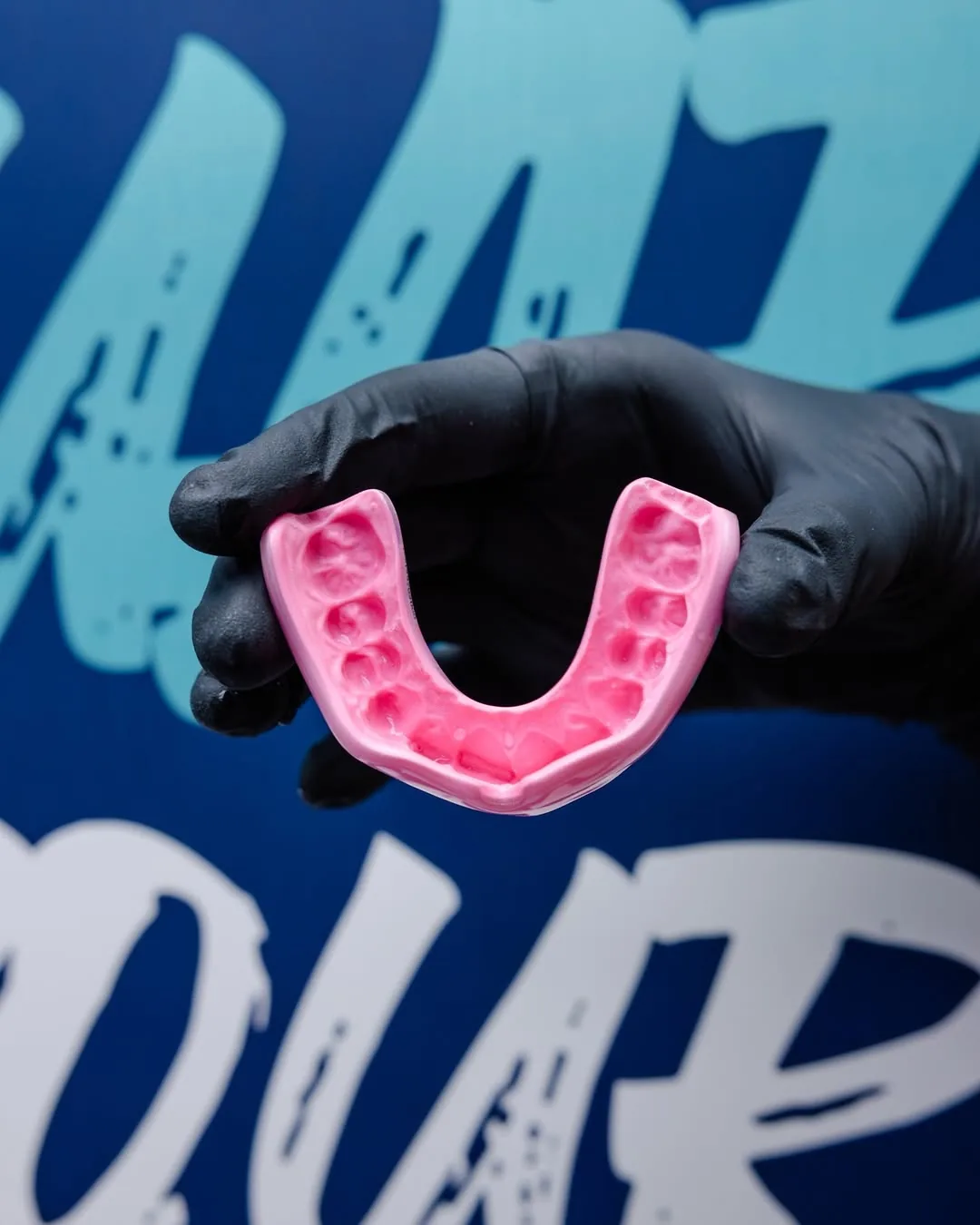
| Custom, single layer | One sheet formed over a model of your teeth | Shaped to your teeth, but thinner after forming than a layered guard |
| Custom, dual or triple layer | Two or three sheets formed over a model of your teeth | Keeps more thickness where knocks land; all three of our tiers are built this way |
Comfort and fit: how a sports mouthguard should fit
A guard should stay on your top teeth without you biting down to hold it in. You should be able to open your mouth, call to teammates and breathe hard while wearing it.
It should cover your top teeth and the gum just above them, without sharp edges or a back edge that makes you gag. A guard that drops when you open your mouth, or that you chew to keep in place, gives less protection and is easy to lose.
Material and thickness
Most sports mouthguards, from shop guards to custom ones, are made from EVA (ethylene vinyl acetate), a soft, rubbery plastic. What changes between guards is how the material is shaped and how thick it ends up.
Heat-forming thins a sheet as it stretches over the teeth. One study found single and double-layer guards lost about half their thickness at the edges of the front teeth. Research on multi-layer guards recommends at least two layers to keep enough thickness over the front teeth, where knocks land.
Customisation
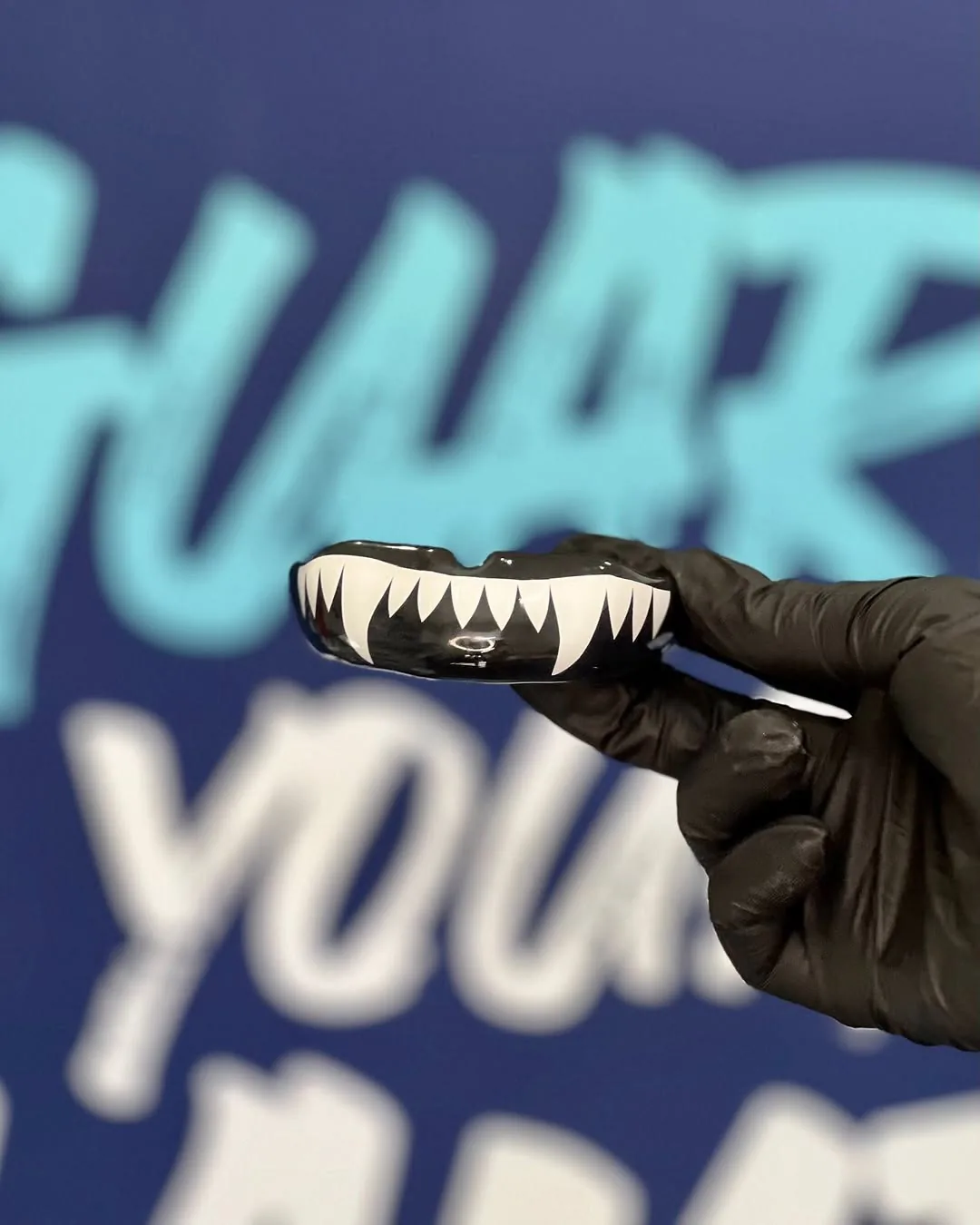
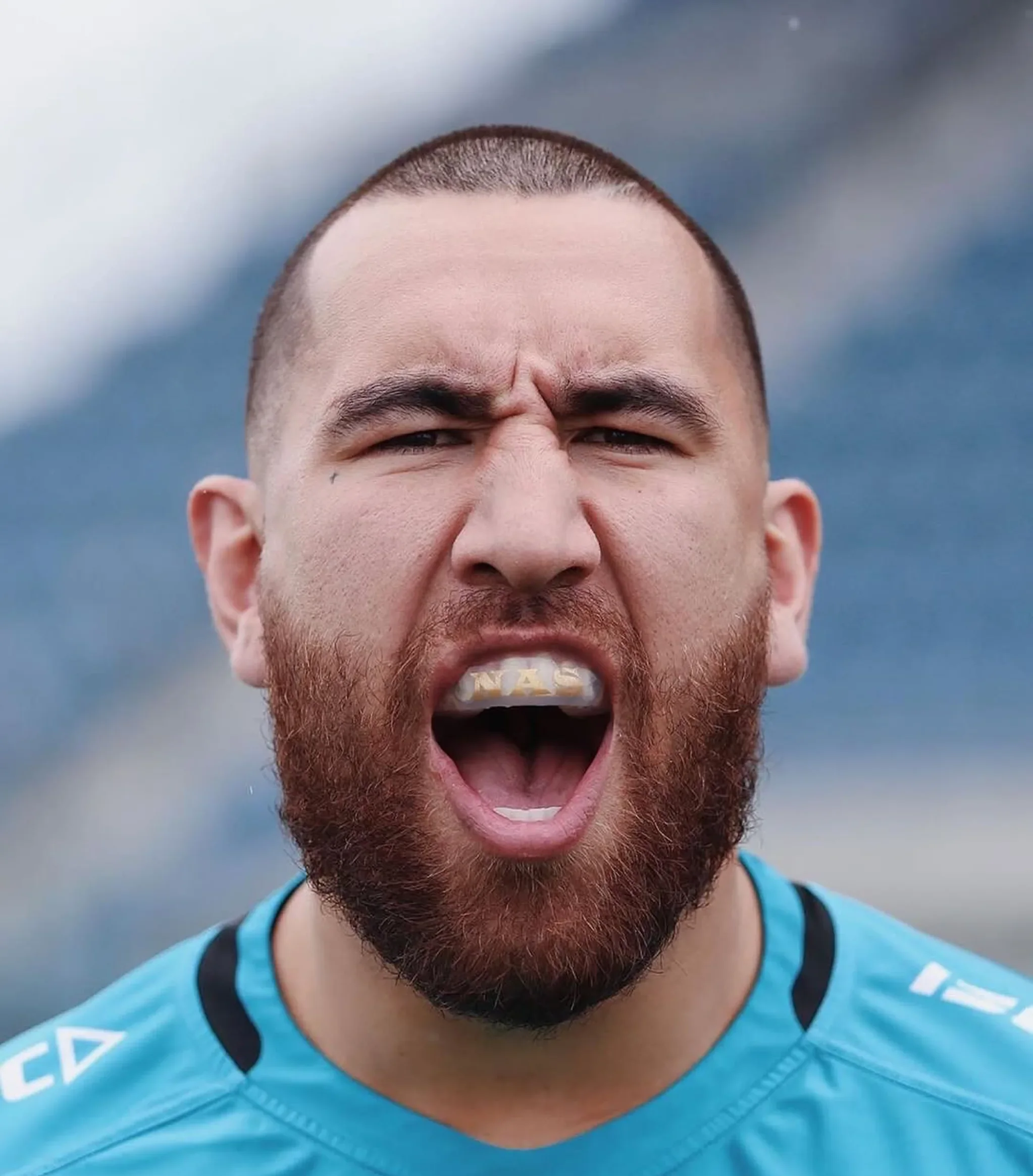
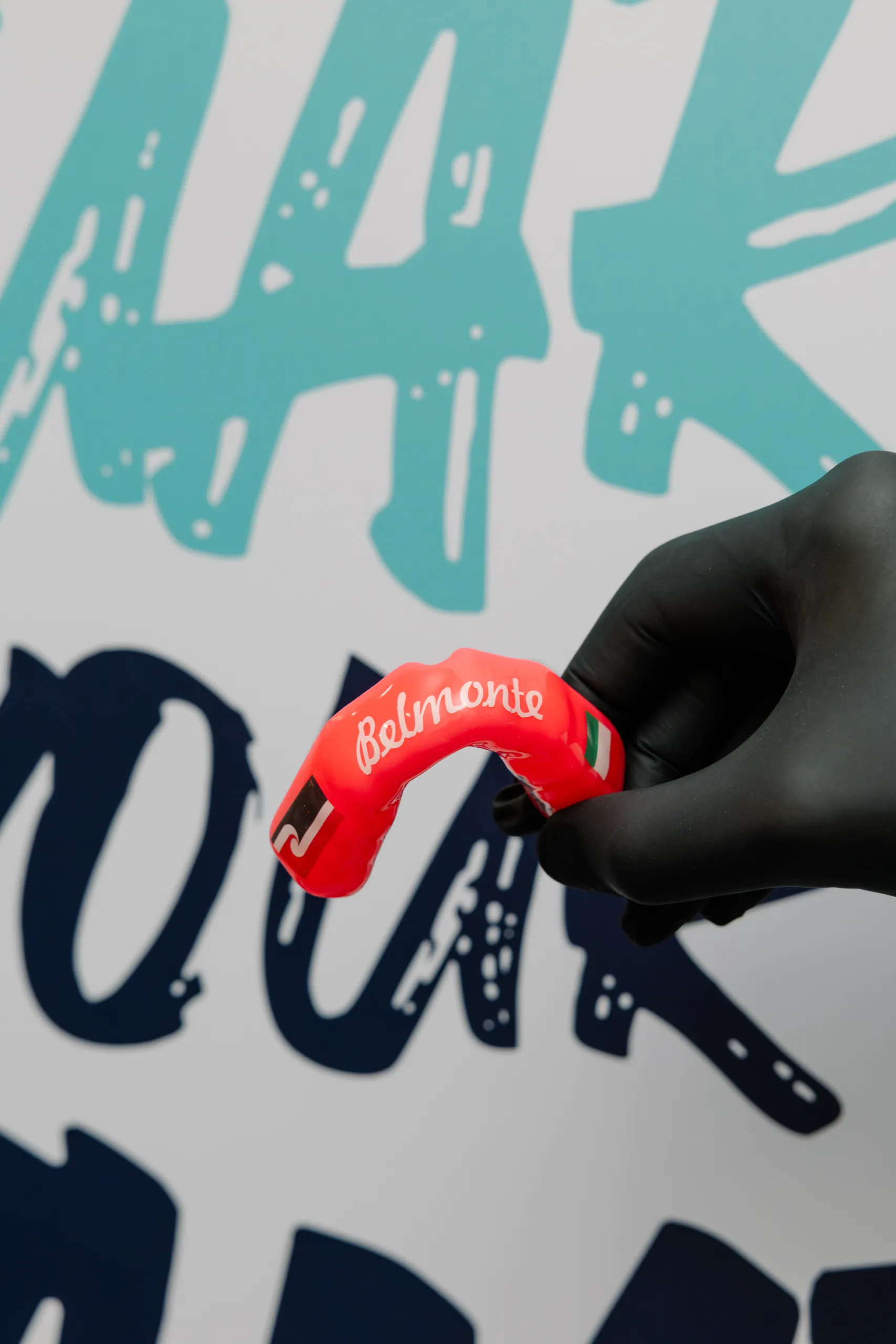
Choose colours, then add names, numbers, flags and symbols in our online designer. Each uploaded image or font outside the designer's list is $20 extra.
Check your competition's colour rules first. Your name on the guard also helps if it goes missing at training.
Cost
Shop guards cost about $10 to $70. Our custom guards are $230 to $365, made in our own lab inside Dental Spot, a full dental practice in Croydon.
You can claim it on your health fund under item 151, on the spot in our Croydon clinic. Your gap depends on your fund and cover.
What are the downsides of wearing a mouthguard?
A mouthguard makes talking harder, needs brushing after every use and a vented case to dry in, and wears out: players under 18 need a new one every year, and adults need one when theirs cracks, thins or stops fitting. A custom guard also costs more up front.
Why wear a mouthguard, and which sports need one?
The Australian Dental Association says a sports mouthguard absorbs and spreads the force of a knock to the face, which can protect you from broken jaws, fractured, cracked or knocked-out teeth, and cut lips and tongues. It names rugby union, rugby league, AFL, hockey and boxing, and also cricket, basketball, netball, touch football, skateboarding and soccer, as sports that can injure the teeth and mouth.
Wear it at training as well as on game day. The association and Sports Medicine Australia encourage every club to adopt a no mouthguard, no play policy.
Competition rules
The NRL's mouthguard policy strongly recommends a mouthguard at every level and names a custom-fitted guard as the ideal form. The AFL's national community football policy says custom-made guards should be used by all players.
Combat sports set colour rules. Boxing Australia's current rules allow any colour; IBA rules ban red. International Muay Thai rules (IFMA) ban red and pink. The NSW Department of Education makes a fitted guard mandatory for school hockey. Rules change, so check your sport's governing body's current rules before you choose colours.
Children, braces and changing teeth
Children grow out of guards as their teeth change, so check the fit each season.
We generally recommend a Light mouthguard for children with braces once their teeth are aligned. If teeth are still moving, we recommend waiting. Contact the team to discuss the right timing with your orthodontist or dentist.
Timing before the season
The scan takes under five minutes, at our Croydon clinic or a club scan day. Allow 7 to 10 working days after that, plus postage if we send it to you.